Chicago's Trusted Lumber Yard & Building Materials Supplier
Quality materials, expert guidance, and fast delivery for every building project across Chicagoland.
30+ Years Experience
Serving Chicago builders since day one
Same-Day Delivery
Order by 10 AM, delivered today
Expert Staff
Knowledgeable pros who know Chicago building
Chicago Lumber & Building Materials supplies dimensional lumber, hardwood, plywood, decking, siding, roofing, and fencing materials to homeowners and contractors across Chicagoland. We offer same-day delivery, custom milling, free material estimates, and competitive pricing on every order.
Request a Quote
Our Products
Everything you need to build, renovate, and maintain properties across Chicago and the suburbs.
Lumber
Framing lumber, dimensional lumber, engineered wood, plywood, and specialty hardwoods for every construction project.
View productsDecking
Pressure-treated, cedar, and composite decking materials plus railing systems, hardware, and accessories.
View productsSiding
Vinyl, fiber cement, wood, and engineered wood siding products for new installations and replacement projects.
View productsRoofing
Asphalt shingles, underlayment, ice and water shield, flashing, and ventilation for Chicago roofing projects.
View productsFencing
Wood, vinyl, and metal fencing materials including posts, pickets, panels, gates, and hardware.
View productsDoors & Windows
Interior and exterior doors, replacement windows, patio doors, and related hardware and accessories.
View productsInsulation & Drywall
Fiberglass batts, rigid foam, spray foam kits, drywall sheets, joint compound, and accessories.
View productsMoldings & Trim
Interior and exterior trim, crown molding, baseboard, casing, and decorative millwork profiles.
View productsHow to Choose the Right Lumber
Selecting the right lumber can make or break your project. Here are the four essentials every buyer should know before placing an order.
Know Your Species
Different wood species serve different purposes. Pine (SPF) is the workhorse of framing lumber — affordable, strong, and readily available. Oak is the go-to hardwood for furniture, flooring, and cabinetry thanks to its durability and beautiful grain. Cedar is naturally rot-resistant, making it ideal for decks, fences, and any outdoor application exposed to Chicago's weather. Maple is prized for cabinetry and interior millwork because of its fine, uniform grain and ability to take stain evenly.
Understand Grades
Lumber grades indicate structural quality and appearance. #1 Grade has minimal knots and defects — the best structural choice for load-bearing applications. #2 Grade allows more knots and is the standard for most framing and general construction. Select Structural is the highest structural grade, used for engineered applications and visible framing. Stud Grade is specifically graded for vertical use in wall framing and is the most economical option for stud walls.
Check Moisture Content
In Chicago's climate — with humid summers and bone-dry heated winters — moisture content (MC) is critical. Kiln-dried lumber (KD-HT) is essential for interior framing to prevent warping and shrinkage after installation. Interior projects should target 6–8% MC, while exterior lumber can tolerate 12–19% MC. Buying green or air-dried lumber for interior work in Chicago almost guarantees problems: nail pops, drywall cracks, and squeaky floors as the wood dries out over the first heating season.
Match to Your Project
The right combination of species and grade depends on your application. Building a deck? Pressure-treated southern pine or cedar handles ground-level moisture. Framing a wall? #2 SPF is the cost-effective standard. Replacing trim on a historic Chicago bungalow? Clear-grade pine or poplar mills to a smooth finish. Installing kitchen cabinets? Hard maple or red oak delivers the strength and look you need. Our staff helps you make the match — saving you money and avoiding costly mistakes.
Why Chicago Builders Trust Us
Four reasons homeowners and contractors across Chicagoland choose us as their building materials supplier.
Chicago-Native Expertise
We know local building codes, weather challenges, and construction styles inside and out. From greystone restorations in Logan Square to bungalow rehabs in Portage Park, we understand what Chicago projects demand.
Premium Materials
Carefully sourced lumber and building supplies graded for quality. Every board in our yard is stored and handled to ensure straight, dry, and defect-free stock that meets or exceeds code.
Fast Delivery
Same-day and next-day delivery across all Chicago neighborhoods and suburbs. Our flatbed, boom truck, and enclosed delivery fleet gets materials exactly where you need them, on time.
Pro & Homeowner Friendly
Whether you're a contractor running a crew or a homeowner tackling a weekend project, our staff meets you where you are with the right advice, the right materials, and fair pricing.
Our Yard & Operations
From our lumber yard to your job site — quality materials handled with care at every step.
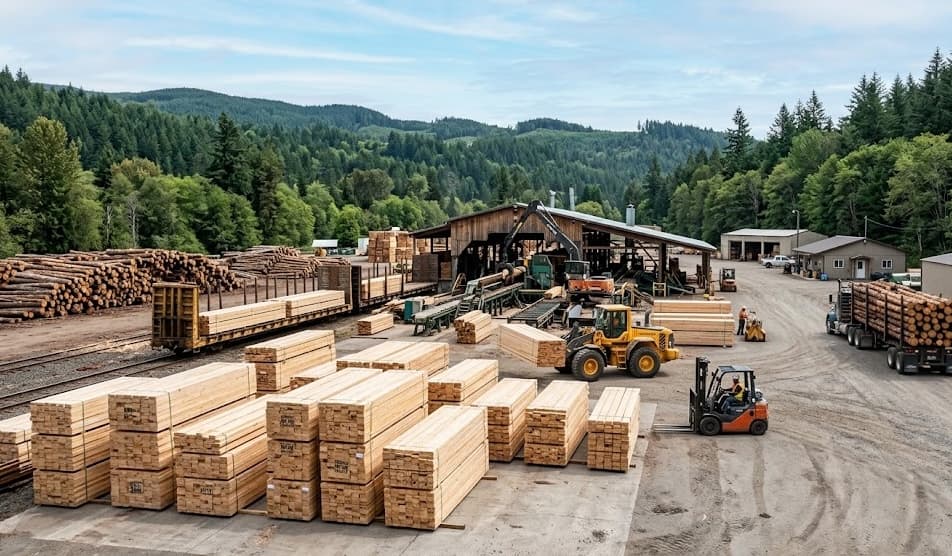
Our Lumber Mill Partners
Sourced from certified sustainable forests across North America
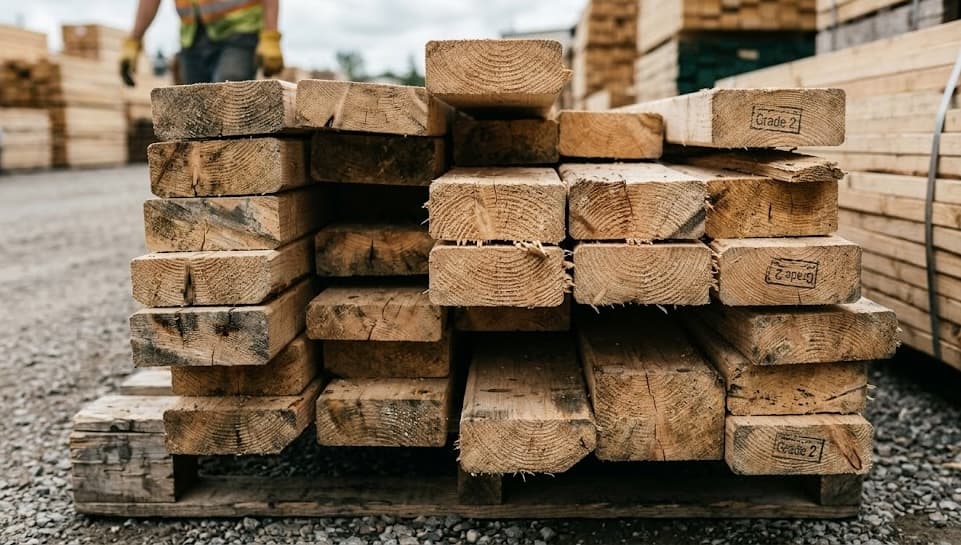
Graded Lumber Stock
Every piece inspected and graded
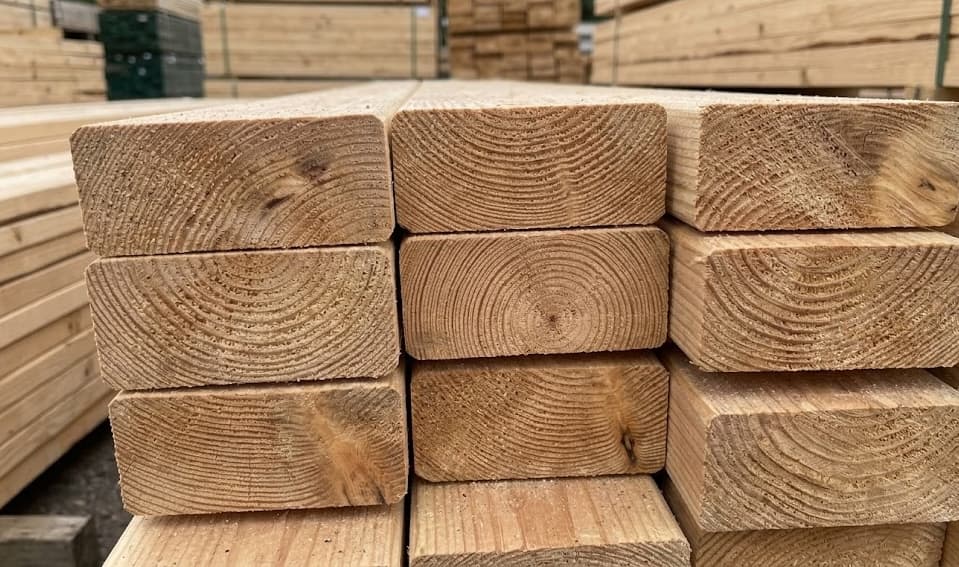
Premium Quality
Tight grain patterns for strength and durability
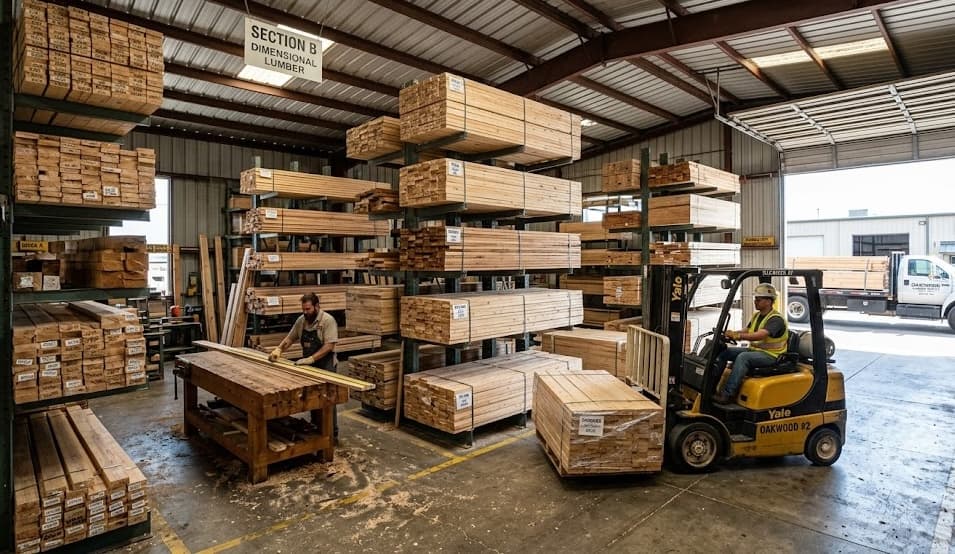
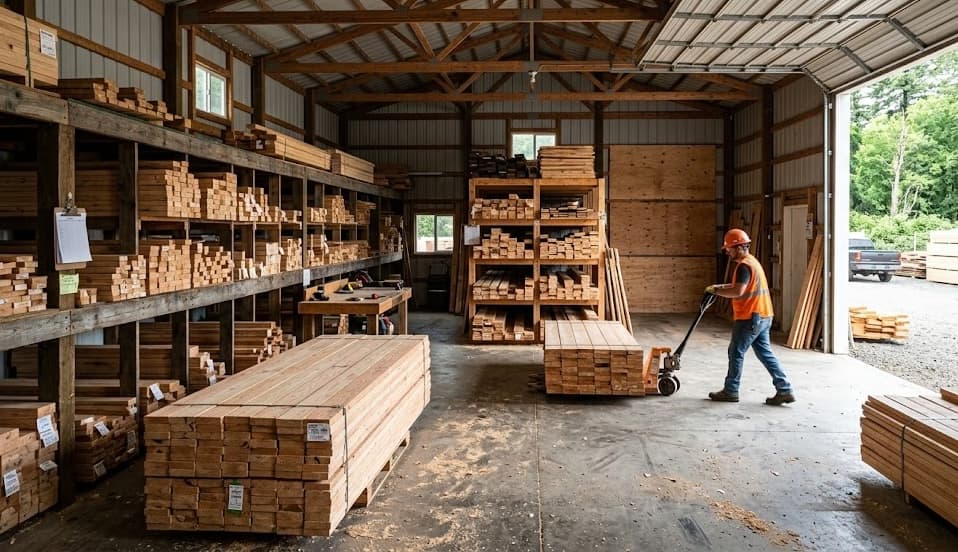
Organized Warehouse
Easy access to every product in stock
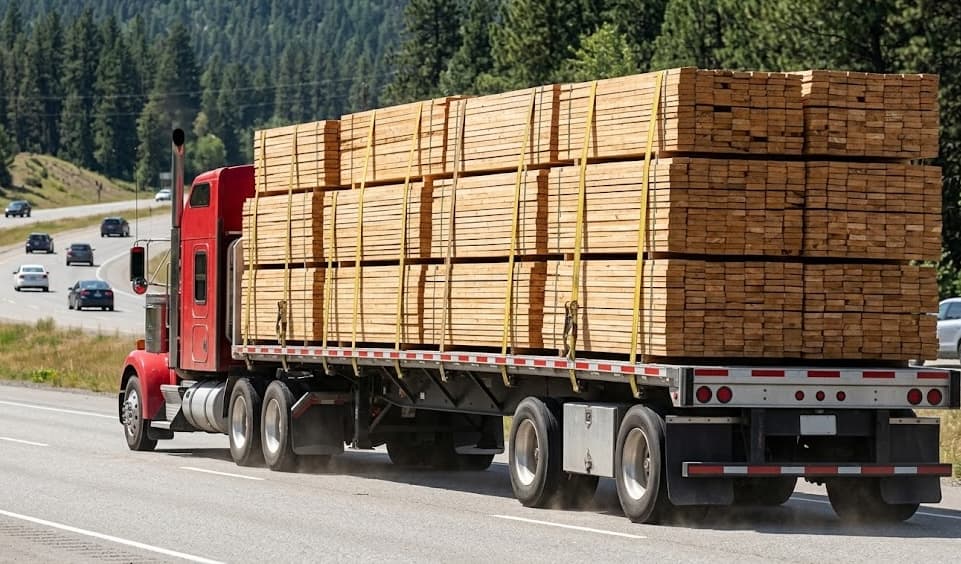
Reliable Delivery Fleet
Same-day and next-day delivery across Chicagoland
Real Numbers: Lumber Pricing Transparency
We believe you deserve to know what materials cost before you visit the yard. Here are current approximate price ranges for our most popular products.
2x4x8 SPF Stud
$3.50 – $5.50
Per piece · Kiln-dried, framing grade
2x6x8 SPF
$5.50 – $8.00
Per piece · #2 & Better grade
2x10x12 Douglas Fir
$14 – $22
Per piece · Premium structural
4x4x8 Pressure-Treated
$12 – $18
Per piece · Ground-contact rated
5/4x6 Cedar Deck Board
$3.50 – $5.50
Per linear foot · Western red cedar
3/4" CDX Plywood
$35 – $55
Per 4x8 sheet · Structural sheathing
Composite Decking
$4 – $10
Per linear foot · Multiple brands
Red Oak Hardwood
$5 – $9
Per board foot · FAS & Select grade
Prices fluctuate based on market conditions, supplier availability, and order volume. The ranges above are approximate and provided for planning purposes. Contact us or call for current pricing on your specific project needs. Contractor accounts receive volume discounts beyond these listed ranges.
Our Services
Beyond materials, we provide the support that keeps your project moving.
Delivery
Same-day and next-day delivery across Chicagoland. Flatbed, boom truck, and enclosed options for every material type.
Learn moreCustom Milling
Custom cutting, planing, and profile matching for specialty projects and historic restoration work.
Learn moreMaterial Estimates
Free, no-obligation material take-offs for any project. Bring your plans and we calculate everything you need.
Learn moreContractor Accounts
Volume pricing, net-30 terms, a dedicated rep, and priority service for professional builders and remodelers.
Learn moreChicago Building Season Calendar
Timing matters in Chicago construction. Here is a month-by-month guide to help you plan your project around the city's climate and building rhythms.
January – February
Planning Season
The ground is frozen and outdoor work is limited, but this is prime planning time. Finalize blueprints, review permit requirements with the City of Chicago, and line up your contractor. Order materials now to lock in pricing before the spring rush — lumber prices typically climb 8–15% between February and May. Use this downtime to visit our showroom and compare decking, siding, and trim options in person.
March – April
Site Prep Begins
As the frost line recedes, foundation work and site preparation can begin. Chicago's clay-heavy soil needs time to dry after the thaw, so experienced contractors watch soil conditions carefully before excavating. This is the time to pour footings for decks, set fence posts, and start framing on projects with completed foundations. Schedule your material deliveries early — our delivery calendar fills up fast through April and May.
May – June
Peak Building Season
This is when Chicago construction hits full stride. Deck builds, fence installations, garage construction, and framing projects are all in peak demand. The weather is warm enough for pressure-treated lumber to accept stain, and long daylight hours mean more productive workdays. Order ahead — popular items like pressure-treated 6x6 posts and composite decking can run low. Homeowners tackling DIY decks should aim to start by mid-May to finish before July cookouts.
July – August
Exterior Work
Hot, dry summer weather is ideal for siding installation, roofing projects, and exterior painting. Fiber cement siding performs best when installed in warm temperatures, and asphalt shingles seal properly in the summer heat. Chicago's July and August humidity is high, so pay attention to wood moisture content for any exterior trim work. This is also prime time for staining and sealing decks and fences — the wood has had enough warm days to dry to the right moisture level for finish adhesion.
September – October
Interior Finishing
As temperatures drop, the focus shifts to interior work: trim and molding installation, hardwood flooring, cabinetry, and insulation upgrades. This is the best time to weatherproof your home before winter — add insulation, replace old windows, and seal gaps. Chicago's heating season starts in earnest by late October, so finishing insulation and drywall before the furnace kicks on saves significantly on energy costs. Our custom milling shop stays busy matching historic trim profiles during this season.
November – December
Plan Next Year
Winter is for interior projects and forward planning. Tackle that kitchen renovation, install new interior doors, refinish hardwood floors, or build custom shelving while you're spending more time indoors. This is also a smart time to budget for next year's projects — material costs are often more favorable in the off-season, and ordering early guarantees availability. Stop by our yard for planning consultations and to get a head start on spring project estimates.
Building Materials for Chicago's Unique Climate
Chicago puts building materials to the test like few other cities in North America. The freeze-thaw cycle alone — where temperatures can swing from 50 degrees above zero to well below zero within the same week — causes untold damage to improperly specified lumber, decking, siding, and roofing every single year. Add in lake-effect moisture that drives humidity levels through the roof in summer and dumps heavy, wet snow in winter, and you have a climate that punishes shortcuts and rewards smart material selection.
Snow loads in the Chicago metropolitan area can exceed 25 pounds per square foot on flat and low-slope roofs, which means structural lumber, engineered beams, and roof sheathing must be specified to handle real weight, not theoretical minimums. Wind is another constant factor. Chicago earns its reputation with sustained winds off Lake Michigan that test every fastener, shingle, and siding panel on lakefront and high-exposure properties. We help customers select wind-rated roofing systems, impact-resistant siding, and properly sized structural components that hold up to decades of Chicago weather.
Our staff lives and works here. We have seen what happens when pressure-treated lumber isn't rated for ground contact in Chicago's clay-heavy soil, when decking fasteners corrode after two winters because someone used the wrong screws, and when siding fails because it wasn't installed with the right drainage plane behind it. That firsthand knowledge is built into every recommendation we make. When you buy materials from us, you are not just getting lumber — you are getting the benefit of decades of experience building in this city.
Customer Stories
Real projects, real results. Here is how Chicago builders and homeowners put our materials to work.
Zbigniew Kowalczyk
General Contractor · Portage Park
Project: Built 12 residential decks across the northwest side in a single summer, ranging from simple 12x14 pressure-treated platforms to a 600-square-foot multi-level cedar entertainment deck in Edison Park.
“I ran through about 14,000 board feet of decking material that summer and never once had a delivery miss its window. Their pressure-treated stock is consistently straight and dry — I'm not culling 20% of every load like I used to at the big box. That alone saves me a full day on every project.”
Ximena Álvarez-Montoya
Homeowner · Lincoln Park
Project: Complete kitchen renovation in a 1920s Lincoln Park bungalow, including custom red oak cabinetry, maple butcher-block island countertop, and period-appropriate crown molding throughout the first floor.
“I walked in with a Pinterest board and zero construction knowledge. Their guy spent 45 minutes helping me understand the difference between oak grades and picked out the perfect boards for my cabinet faces. They even milled the crown molding to match the original 1920s profile in my dining room. The kitchen turned out better than I imagined.”
Oluwaseun Adeyemi
Property Manager · South Shore
Project: Ongoing maintenance and renovation of 15 two-flat buildings across Chatham, Avalon Park, and South Shore — including porch replacements, fence repairs, new back stairs, and interior unit turnovers.
“Managing 15 buildings means something always needs fixing. I keep a running order with these guys and they deliver twice a week to whichever property needs material. Their contractor account pricing saves me at least 15% over retail, and having a dedicated rep who knows my properties inside and out makes reordering effortless.”
Serving All of Chicagoland
From our Grand Avenue yard, we deliver lumber and building materials to neighborhoods across the city and suburbs within a 40-mile radius.
Did You Know? Chicago Lumber Facts
Chicago and lumber have a shared history that stretches back over 150 years. Here are some fascinating facts about the role lumber has played in building this great city.
Rebuilt from Ashes
After the Great Chicago Fire of 1871 destroyed over 17,000 structures, the city was rebuilt almost entirely with lumber. Within just two years, more than 10,000 new wood-frame buildings stood where the fire had leveled the city — making it one of the fastest urban reconstructions in history.
World's Largest Lumber District
In the late 1800s, the lumber district along the south branch of the Chicago River was the largest in the world. Logs floated down from Wisconsin and Michigan forests, and Chicago's sawmills processed more board feet of lumber annually than any other city on the planet.
Balloon-Frame Revolution
Chicago's balloon-frame construction technique — using standardized dimensional lumber and nails instead of heavy timber joinery — revolutionized American building in the 1830s. This innovation made housing affordable and fast to construct, enabling the rapid westward expansion of American cities.
300,000 Board Feet Daily
During Chicago's post-fire rebuilding era and the construction boom of the 1880s and 1890s, over 300,000 board feet of lumber were consumed daily. That is enough wood to frame roughly 20 average homes every single day — a pace of construction that the city sustained for years.
The Classic Chicago Bungalow
The classic Chicago bungalow — with its low-slung profile, full basement, and distinctive brick exterior — uses approximately 8,000 board feet of lumber in its framing alone. Over 80,000 of these bungalows were built between 1910 and 1940, representing one of the largest collections of a single housing type in any American city.
Frank Lloyd Wright's Legacy
Chicago has the largest collection of Frank Lloyd Wright buildings in the world, many featuring custom woodwork that pushed the boundaries of what lumber could do. Wright's Prairie-style homes in Oak Park and Hyde Park showcase intricate wood detailing, custom millwork, and innovative structural uses of wood that continue to inspire builders and architects today.
Frequently Asked Questions
Ready to Start Your Project?
Get a free material estimate from our experienced team. Whether you are planning a deck, a renovation, or new construction, we will help you spec the right materials at the right price.