Lumber & Building Materials Delivery Across Chicagoland
Getting heavy building materials to your job site should not be the hardest part of your project. Tell us what you need and where, and we will connect you with partner suppliers in our network that deliver across the Chicago metropolitan area, so you can compare delivery options.
Request a Quote
Delivery Timing and Scheduling
Time is money on any construction project, and waiting days for materials is not an option when a crew is standing idle. When you request a quote through Chicago Lumber & Building Materials, tell us when you need materials on site. We pass your request to partner suppliers in our network, and they respond with the delivery windows they can offer. Lead times depend on stock, order size, and your location. Ask about weekend delivery if your schedule needs it.
Many suppliers schedule deliveries in AM or PM windows and contact you on delivery day with an arrival estimate. Confirm how the supplier you choose handles scheduling and notifications so you can plan your workday with confidence.
Delivery Area: Chicago and the Suburbs
Partner suppliers in our network deliver to neighborhoods across the City of Chicago and to many surrounding suburbs. Whether your project is in Lincoln Park, Lakeview, West Loop, Logan Square, Hyde Park, Bridgeport, Rogers Park, Pilsen, Bucktown, or another Chicago neighborhood, include your job-site location in your request so we can route it to suppliers that serve your area. On the suburban side, requests often come from Oak Park, Evanston, Cicero, Berwyn, Naperville, Schaumburg, Arlington Heights, Downers Grove, Elmhurst, and communities throughout Cook, DuPage, Lake, and Will counties.
Chicago deliveries come with their own challenges: narrow alleys, permit-only parking zones, low-clearance viaducts, one-way streets, and dense residential blocks. Mention any access concerns in your request so suppliers can plan the right truck and route before they arrive.
Common Delivery Vehicle Types
Different materials and job sites call for different equipment. Suppliers in the Chicago area commonly deliver with the following vehicle types; which ones are available depends on the supplier:
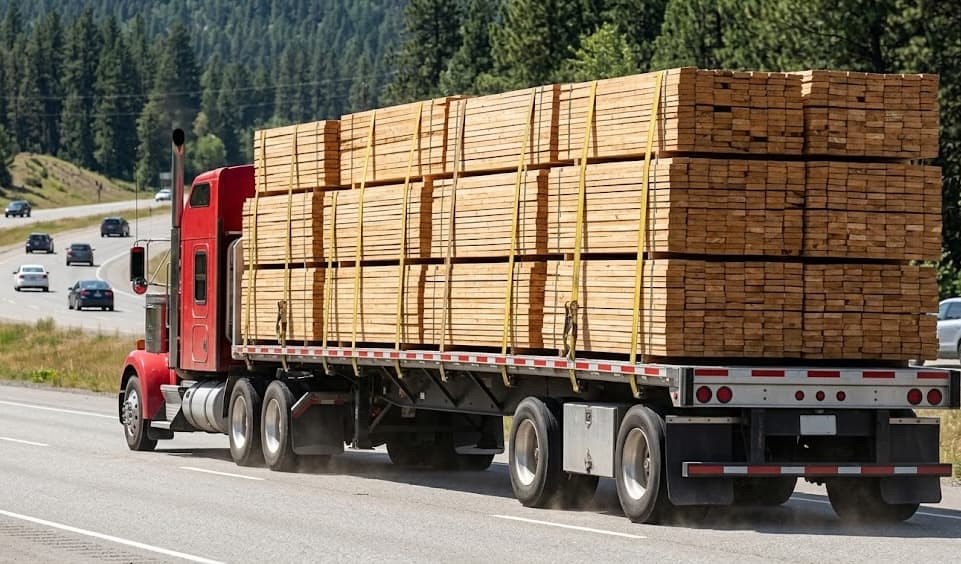
- Flatbed trucks for lumber, plywood, OSB, and large panel goods. Flatbeds allow forklift loading and make it easy to unload long materials at the job site.
- Boom trucks for rooftop or upper-floor placement of shingles, plywood, and framing materials. A hydraulic boom can lift bundles to the roof or an upper level, saving manual hauling and reducing the risk of worker injury.
- Enclosed delivery trucks for finish-grade materials that need weather protection in transit, including interior trim, hardwood flooring, and specialty millwork.
What to Expect on Delivery Day
Each supplier has its own process, but a typical delivery from a lumber yard or building-material supplier looks like this:
- Order confirmation: The supplier confirms your order, delivery date, and time window.
- Day-of notification: Many suppliers contact you when the truck is loaded or on its way with an estimated arrival time.
- Arrival and placement: The driver places materials where you direct, as site conditions allow. Lumber and sheet goods are often set on stickers or blocking to keep them off the ground. For boom deliveries, the operator places bundles on the area you designate.
- Sign-off: You or your site foreman checks the delivery against the packing slip and signs the delivery receipt.
How to Prepare Your Site for Delivery
A little preparation goes a long way toward a smooth delivery. Before the truck arrives, make sure:
- The delivery area is clear of vehicles, debris, and equipment.
- There is enough room for the truck type scheduled. Ask the supplier how much width and maneuvering length their truck needs.
- Someone authorized to accept the delivery is on site during the scheduled window.
- For boom deliveries, overhead power lines and tree limbs do not obstruct the boom path.
- If the delivery or material staging will use a city street, check with the City of Chicago whether a public way permit is required and have it in place.
Delivery Pricing
Delivery pricing is set by each supplier. Fees usually depend on distance, load size, and the equipment needed. Boom or crane placement typically costs extra. Because these policies vary, each supplier that responds to your request will quote delivery along with your materials, so you can compare the full cost before you commit.
Choosing the Right Vehicle
When you request a quote, it helps to know which kind of delivery suits your load and site. Here is a general guide to common vehicle types. Capacities and reach vary by truck and supplier, so confirm specifics with the supplier you choose.
| Vehicle | Best Use Cases | What to Ask the Supplier |
|---|---|---|
| Flatbed Truck | Lumber, plywood, OSB, long framing stock, panel goods | Bed length, whether a truck-mounted forklift is included, alley access |
| Boom Truck | Rooftop shingle delivery, upper-floor framing, plywood to upper levels | Reach and lift height, overhead clearance needs, added fee |
| Enclosed Box Truck | Hardwood flooring, finish trim, millwork, moisture-sensitive materials | Availability, unloading method, how far inside materials can be carried |
| Curtain-Side Trailer | Mixed loads, palletized goods, large orders | Site access for a larger vehicle, side-unloading space |
Flatbed trucks are the standard choice for lumber and sheet goods. The open bed allows forklift loading from either side and can carry long dimensional lumber. Many flatbeds can work in Chicago residential alleys, but tight turns and parked cars can limit access, so describe your site in your request.
Boom trucks carry a hydraulic crane that can lift loads to a roof or upper floor. They are popular with roofing contractors who need shingle bundles, plywood, or underlayment placed directly on the roof, and they reduce the labor and injury risk of hauling heavy material up a ladder. Not every supplier offers boom delivery, so ask in your request.
Enclosed box trucks protect finish-grade materials from rain, snow, and road spray. Interior trim, pre-finished hardwood flooring, custom millwork, and specialty mouldings are often delivered this way.
Curtain-side trailers combine flatbed capacity with weather protection. Retractable side curtains allow forklift access from the side while keeping materials covered in transit, which suits large mixed orders.
Jobsite Safety Considerations
Keeping everyone safe during a delivery is a shared responsibility. Suppliers set their own site requirements, but these are common expectations before a truck arrives:
- A clear path. The route from the street to the placement area should be free of vehicles, dumpsters, scaffolding, tools, and other obstructions, and wide enough for the truck or forklift.
- Firm, stable ground. Loaded delivery trucks are heavy. Soft, muddy, or recently excavated ground can cause a truck to sink or tip. If the delivery area is unpaved, tell the supplier in advance.
- Overhead wire clearance. Boom and crane operators must keep a safe distance from energized power lines under OSHA rules, and trees or cable lines can also block the boom. If lines are near the placement area, raise it with the supplier and contact your utility provider well before the delivery date.
- Someone present to receive the delivery. Many suppliers require an authorized adult on site to verify the material count and sign the delivery receipt.
- Do not block fire hydrants, sidewalks, or crosswalks. Materials should not be placed on or block any fire hydrant, public sidewalk, crosswalk, or accessible path. The City of Chicago can issue fines for obstructing the public way.
- Tell the supplier if conditions change. If construction activity, weather, or permit issues change the site between scheduling and delivery day, contact the supplier as early as possible. They may be able to adjust the plan, reschedule, or send a different vehicle.
Neighborhoods and Areas in Our Network
From the lakefront to the far western suburbs, partner suppliers in our network cover much of Chicagoland. Here are some of the neighborhoods and communities we receive delivery requests from:
- North Side: Lincoln Park, Lakeview, Ravenswood, North Center, Lincoln Square, Uptown, Edgewater, Rogers Park, Andersonville
- West Side and Near West: West Loop, Wicker Park, Bucktown, Logan Square, Humboldt Park, Ukrainian Village, West Town, Austin
- South Side: Bridgeport, Hyde Park, Beverly, Bronzeville, Pilsen, Back of the Yards, Chatham
- North Suburbs: Evanston, Skokie, Wilmette, Park Ridge, Des Plaines, Niles, Morton Grove
- West Suburbs: Oak Park, Berwyn, Cicero, Elmhurst, Downers Grove, Naperville, Wheaton, Hinsdale
- South Suburbs: Orland Park, Tinley Park, Oak Lawn, Lansing, Homewood, Calumet City
Do not see your area listed? Request a quote anyway. We will pass your request to partner suppliers that may serve your location.
Why Request Delivery Through Our Network
Save hours of loading, driving, and unloading by having a supplier deliver to your site
Reduce handling damage by having materials delivered on equipment built for the load
Compare delivery windows from more than one supplier to fit your schedule
Avoid rental truck costs and the hassle of hauling oversized materials yourself
Ask suppliers about placement on site, including upper floors where available
See delivery fees up front in each supplier's quote
Coordinate timing so materials arrive when you are ready for them, not before
Delivery FAQ
Related Services
Request a Delivery Quote
Ready to get materials delivered to your job site? Send us your order details and location, and we will pass your request to partner suppliers in our network that deliver to your area.